Traini-Dog Translator&Training
- 3.7
- Rating
- 1.00M
- Installs
- Free
- Price

 Analysis by App-foxy
I approached Traini-Dog Translator&Training as an entertainment app with a practical twist: it tries to make everyday communication with a dog feel easier by interpreting barks, emotions, and behavior through AI. That idea is immediately appealing, especially when a dog suddenly starts barking at an empty hallway, refuses a familiar food, or behaves differently after a change at home. My experience is that the app is most useful when treated as a conversation starter and observation aid, not as a replacement for careful training or professional advice.
Developed by Traini Inc., the app is free to install and aimed at everyone. It has passed the one-million-install mark, which suggests that the concept has reached well beyond a small group of curious pet owners. Its average rating sits at 3.7 from roughly 1.3 thousand ratings, so the reception is mixed enough to encourage realistic expectations. I found that the value depends heavily on how patiently I supplied context and how willing I was to compare the app’s suggestions with what my dog was actually doing.
How connectivity shapes the experience
I find connectivity matters most when I use an interpretation to think through a pattern rather than chase an instant answer. If a request stalls, I can still watch what happened before and after the bark, then return to the question when the connection is steadier; that keeps the dog’s needs ahead of the screen. It also helps me decide which moments are worth bringing into a session.
You May Also Like

 Google Keep - Notes and lists
Google Keep’s Quiet Growth Shows the Appeal of Simpler Notes
As mobile work gets busier, Google Keep keeps winning a simple contest: capture a thought quickly, find it later, and get on with the day.

 Blood Strike: 2.5 Anniversary
Blood Strike’s Loadouts Turn Every Drop Into a Tactical Gamble
A close look at Blood Strike’s custom loadouts: how fast access to signature weapons reshapes its battle royale rhythm, rewards preparation, and narrows the gap between fights.

 Pandora - Music & Podcasts
Pandora’s Music Is Easy to Start, but Harder to Recover
Pandora’s strength is its low-effort path from a seed to a station. Its weak spot is how much confidence it asks you to place in connection, setup, and quiet recovery.

 8 Ball Pool
 Is Built on Rivalries, Rematches, and Routine
A close look at the rivalries, rematches, shared routines, and unanswered safety questions that turn a quick pool match into a persistent mobile community.

 Samsung Music
’s Quiet Strength Is Playing What You Already Own
Its reach comes less from spectacle than from dependable access to a personal library. That simplicity is both the app’s strongest retention engine and its ceiling.

 AccuWeather: Weather Radar
AccuWeather Review: A Quick, Clear Forecast for Everyday Decisions
For everyday plans, the best forecast is the one you can understand quickly. AccuWeather makes rain timing, radar, and local conditions easy to act on, with a few trade-offs.
More From Our News Desk



Why the network matters during interpretation
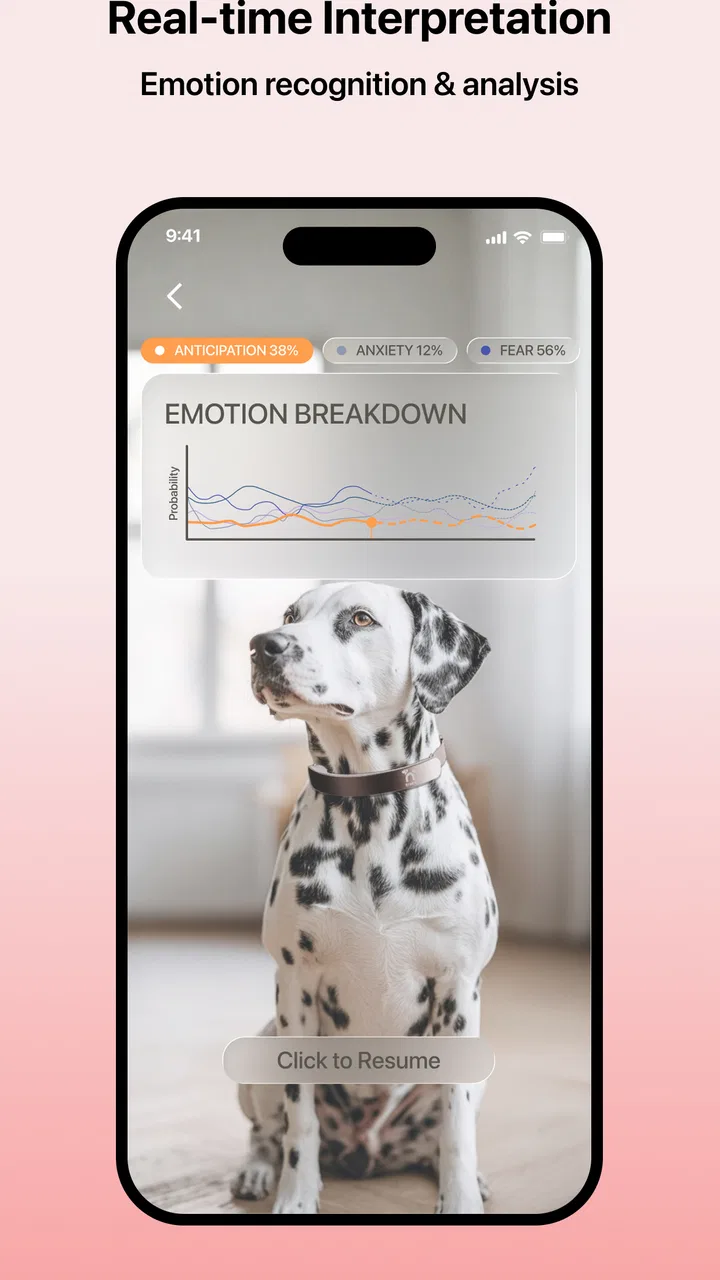
The central appeal of this app is its AI-based interpretation, and that naturally makes connectivity an important part of the experience. When I wanted to examine a bark or behavior, the useful part of the process depended on getting the relevant input processed and receiving a response. This is different from using a simple offline checklist or a downloaded training guide: the app’s appeal comes from asking it to interpret something happening in the moment.
That has a practical consequence. A strong connection makes the experience feel conversational, while a weak connection can turn a quick observation into a waiting exercise. I would not open it expecting an instant answer in every location. If my dog is barking in a basement, a rural garden, a lift, or a crowded park with unstable mobile service, I would first watch the dog and note the circumstances rather than repeatedly tapping the same request.
This is one of the app’s most important trade-offs. AI interpretation can feel more flexible than a fixed library of sound clips, but it is also more dependent on the conditions under which the input is sent and processed. A normal home Wi-Fi connection is the setting where I found the concept easiest to use. Away from home, the app becomes more of a planned tool than a guaranteed emergency companion.
A realistic evening use case
Imagine arriving home and finding your dog pacing near the front door while making short, repeated sounds. Instead of immediately labeling the behavior as excitement, I would use the app after checking the obvious possibilities: water, food, bathroom needs, unusual noise, and signs of discomfort. I would then record the situation in a calm moment, noting whether the dog had been left alone, whether someone was outside, and whether the behavior stopped when I changed rooms.
That workflow is more useful than treating a single translation as a definitive answer. The app may help me think about emotional or behavioral possibilities, but the surrounding details remain essential. If the connection fails, the observation itself is not lost as a learning opportunity. I can still write down the time, trigger, body posture, and outcome, then try again later under better network conditions.
The same approach works for training. If my dog jumps at visitors, I would not wait for a translation before acting. I would create distance, reward calm behavior, and use the app afterward to reflect on the pattern. In my view, this is where the app fits best: it adds a layer of interpretation to a training routine instead of pretending to be the routine.
Using it in mobile situations
Traini-Dog Translator&Training is naturally tempting to use outdoors, because dogs often show the most interesting behavior on walks. A sudden bark at another dog, a refusal to move, or intense sniffing can make me want an explanation immediately. However, outdoor use introduces distractions that can reduce the quality of any interpretation. Wind, traffic, other animals, and the owner’s hurried handling all make it harder to capture a clear picture of what is happening.
I got better results from slowing down the process. I would move to a quieter spot, keep the leash secure without pulling unnecessarily, and observe the dog’s ears, tail, posture, and direction of attention. Only then would I use the app. This is a non-obvious but important tip: the best input is often collected after the behavior settles, not at its loudest point. A frantic moment may be emotionally important, but it is not always the clearest moment to analyze.
For travel, I would think of the app as something to prepare before leaving rather than something to depend on continuously. The free installation makes it easy to keep available, but the experience can become inconvenient if the phone has poor service or the battery is low. I would also avoid handling the phone while crossing a road or managing a reactive dog. Safety and control come before any interpretation.
What happens when a request does not go smoothly
Connectivity problems are not the only possible source of friction. A bark can be ambiguous, and behavior can have several causes at once. A dog that growls may be frightened, guarding something, in pain, overstimulated, or responding to a learned pattern. An AI tool can encourage useful questions, but it cannot remove that ambiguity from real life.
When a result feels too broad or does not match what I see, I would not keep submitting the same moment in the hope of forcing a better answer. Instead, I would change the input. I might wait for a quieter sample, describe the trigger more precisely, or compare the behavior before and after a small environmental change. This turns a failed attempt into a simple observation exercise.
There is also a useful recovery routine for interrupted sessions. I would note three things: what happened immediately before the behavior, what the dog’s body was doing, and what stopped or intensified it. After the connection returns, those notes give the app more meaningful context than a bare bark recording. This method is especially valuable for owners who tend to focus only on sound and overlook posture or surroundings.
If the dog appears injured, unusually lethargic, disoriented, aggressive without an obvious trigger, or persistently distressed, I would skip the translation experiment and contact a veterinarian or qualified behavior professional. The app belongs in the low-risk, curiosity, and routine-training space. It is not the right first response to a possible medical or serious behavioral emergency.
Being thoughtful about mobile data and privacy habits
Because the experience involves a phone, recorded sounds, and possibly descriptions of behavior, I would use it deliberately rather than continuously. I would avoid recording people in the background without their knowledge, especially in public places or inside someone else’s home. Keeping sessions focused on the dog also makes the material easier to interpret and reduces unnecessary clutter.
A practical habit is to use Wi-Fi for longer experiments when convenient, particularly if I am comparing several situations in one training session. For a quick outdoor check, I would keep the request short and avoid repeatedly sending similar samples. This is not only considerate of mobile data; it also encourages better observation instead of turning the app into a button I press whenever the dog makes a noise.
I would also be careful about the emotional effect of the results. A playful translation can be entertaining, but I would not use it to assign human motives such as spite, guilt, or deliberate disobedience. Dogs communicate through patterns, context, posture, and learned associations. The app is more constructive when it helps me ask, “What changed here?” rather than confirming a dramatic story about what the dog supposedly intends.
Training value beyond the novelty
The training angle is what gives the app more staying power than a one-time bark translator. I found it most helpful when I used it alongside a simple record of triggers and outcomes. For example, if my dog reacts to delivery sounds, I can compare the behavior on quiet days with the behavior after a visitor arrives. The app may offer a perspective on the emotional tone, while my notes reveal the repeatable pattern.
A particularly useful workflow is to test one change at a time. I might close the curtains, move the dog farther from the window, or offer a calm alternative behavior, then observe whether the barking changes. If I change everything at once, I learn very little. If I make one adjustment and record the result, the app becomes part of a small experiment rather than a source of isolated guesses.
This approach also exposes a limitation: users looking for a complete, structured obedience course may find the experience less satisfying than a dedicated training program with clearly sequenced lessons. Traini-Dog Translator&Training is better suited to interpreting situations and supporting reflection than replacing a consistent reward-based plan. Owners who want precise schedules, detailed progression, or specialist behavior protocols may prefer a more focused training resource.
Who will enjoy it, and who should pass
I would recommend it to curious dog owners who enjoy observing behavior, beginners who want prompts for thinking about triggers, and families looking for an engaging way to discuss what their dog might be experiencing. It can also be useful for owners who already train regularly and want another way to organize observations around barking or unusual habits.
I would be more cautious about recommending it to someone expecting literal, scientifically exact translations. The name and concept invite that expectation, but real dog communication is not a phrasebook. The app is also a poor fit for anyone who wants a completely self-contained offline tool, since the AI-centered experience is naturally more dependent on a working connection than a static guide.
People dealing with severe separation distress, repeated aggression, sudden medical changes, or complex rescue-dog trauma should use professional support as the main resource. The app may still be an entertaining supplement, but it should not become the authority guiding high-stakes decisions.
Cost, version, and the practical commitment
The app itself is free, which lowers the barrier to trying its basic experience. Optional purchases range from $12.99 to $119.99 per item, so I would pay close attention before committing to anything beyond the free starting point. The difference between casual curiosity and regular use matters here: someone who opens it occasionally may get enough value without spending, while a committed owner should first decide whether the interpretation and training workflow genuinely improve daily routines.
The current version is 1.2.6, and the app runs on Android 7.0 or later. That makes it accessible to people who are not using a brand-new phone, although the quality of the experience will still depend on the device’s microphone, battery condition, and network connection. I would test it at home before relying on it during a walk or trip, especially if the phone is older or frequently struggles with other online apps.
Its Everyone age rating also makes it easy to introduce as a family activity. I would still guide children to treat the results as playful suggestions and teach them not to approach a frightened or agitated dog while holding a phone. The app can encourage empathy, but responsible handling remains the adult’s job.
My connectivity verdict
After using it as an observation companion rather than a magic translator, I think Traini-Dog Translator&Training has a clear place in the entertainment category. Its strongest moments come when I have a stable connection, a specific behavior to examine, and enough patience to add context. Its weakest moments come when I need an instant answer outdoors, when the dog’s behavior is too complex for a short sample, or when I expect the AI to replace training knowledge.
Compared with ordinary pet-entertainment apps, it offers a more interactive reason to return: I can connect a real event in my home or on a walk with a question about emotion and behavior. Compared with conventional training guides, it feels more immediate and personal, but less dependable as a complete program. That trade-off is the key to deciding whether it belongs on your phone.
I would install it for the free starting experience, test it over several calm sessions, and judge it by whether it helps me notice patterns I had been missing. I would use Wi-Fi for longer experiments, keep mobile sessions focused, and never let a translation override visible signs of fear, pain, or danger. My final recommendation is positive for curious owners who want an engaging aid for observation, but conditional for anyone seeking clinical accuracy, guaranteed offline use, or a full training system.
FAQs for Traini-Dog Translator&Training
01What features does Traini-Dog Translator&Training offer?
Traini-Dog Translator&Training provides a unique blend of features designed to enhance communication and training with your dog. The app includes a dog translator that converts your voice into sounds dogs understand, a variety of training exercises, and progress tracking. It's suitable for different dog breeds and training levels, making it versatile for any dog owner.
02Is Traini-Dog Translator&Training effective for all dog breeds?
Yes, Traini-Dog Translator&Training is designed to be effective across various dog breeds. The app includes customizable training modules that cater to different breeds and temperaments, ensuring a personalized training experience. However, user experiences may vary, and patience is key to achieving the best results with your pet.
03Does the app require any special equipment to work?
No special equipment is needed to use Traini-Dog Translator&Training. All you need is a smartphone with either Android or iOS, and a willingness to engage with the app's audio features and training exercises. It uses your phone’s speakers to communicate with your dog, making it convenient and easy to use anywhere.
04Is there a cost associated with Traini-Dog Translator&Training?
Traini-Dog Translator&Training offers both free and premium versions. The free version includes basic features, while the premium version unlocks advanced training modules and additional content. This allows users to choose the option that best suits their needs and budget. Check the app store for specific pricing details.
05How user-friendly is Traini-Dog Translator&Training for beginners?
Traini-Dog Translator&Training is designed with user-friendliness in mind, making it accessible even for beginners. The interface is intuitive, with clear instructions and demonstrations for each feature. The app also includes a helpful FAQ section and customer support to assist users in navigating any challenges they may encounter.
Pros
- User-friendly interface makes training easy.
- Wide variety of training techniques available.
- Includes fun games to engage your dog.
- Real-time feedback to track progress.
- Customizable settings for different dog breeds.
Cons
- Requires in-app purchases for full features.
- Limited offline functionality.
- Not all features work on older devices.
- Occasional app crashes reported by users.
- Some translations may not be accurate.

Traini-Dog Translator&Training
Gallery